

Birds
Additional information
The park has been farmed since Roman times and the area where it now stands was previously water meadow. Gravel extraction occurred between the two world wars and after world war two, thus forming the lakes. The site was developed by North Beds Borough Council between 1978 and 1984 along with the Countryside Commission for passive recreations!
Varied with mature trees, bushes, scrub, reed beds, grassland and water bodies Since 1972, a total of 212 birds have been recorded in the park, 62 breeding.
The best time to visit is before 10 am, before the park gets too busy. Daily records are kept and it would be helpful if all records of interesting species, large numbers, breeding or migration could be passed on to either one of the wardens at the Visitor Centre or directly.
 Red Necked Grebe – Steve Blain
More about the rarer birds:
Spring: Arctic and Black Terns or Little Gull may be seen after a north/north-easterly wind. Osprey occasionally are seen on passage. Common Scoter, Curlew, Whimbrel, Godwits, Red-necked Phalarope, Caspian, Little and Sandwich Terns have passed through and there is always the unexpected delight of seeing a Whinchat, Redstart or Wheatear. The largest flock of Avocet seen in the county also passed over during rain in late March and Shelduck visit regularly. In Spring, you can often find eight species of warbler in the reeds, coppice or scrub.
Autumn: Gannet, Pomarine Skua, Ferruginous Duck, Grey Phalarope, Yellow-browed Warbler and Bearded Tit .
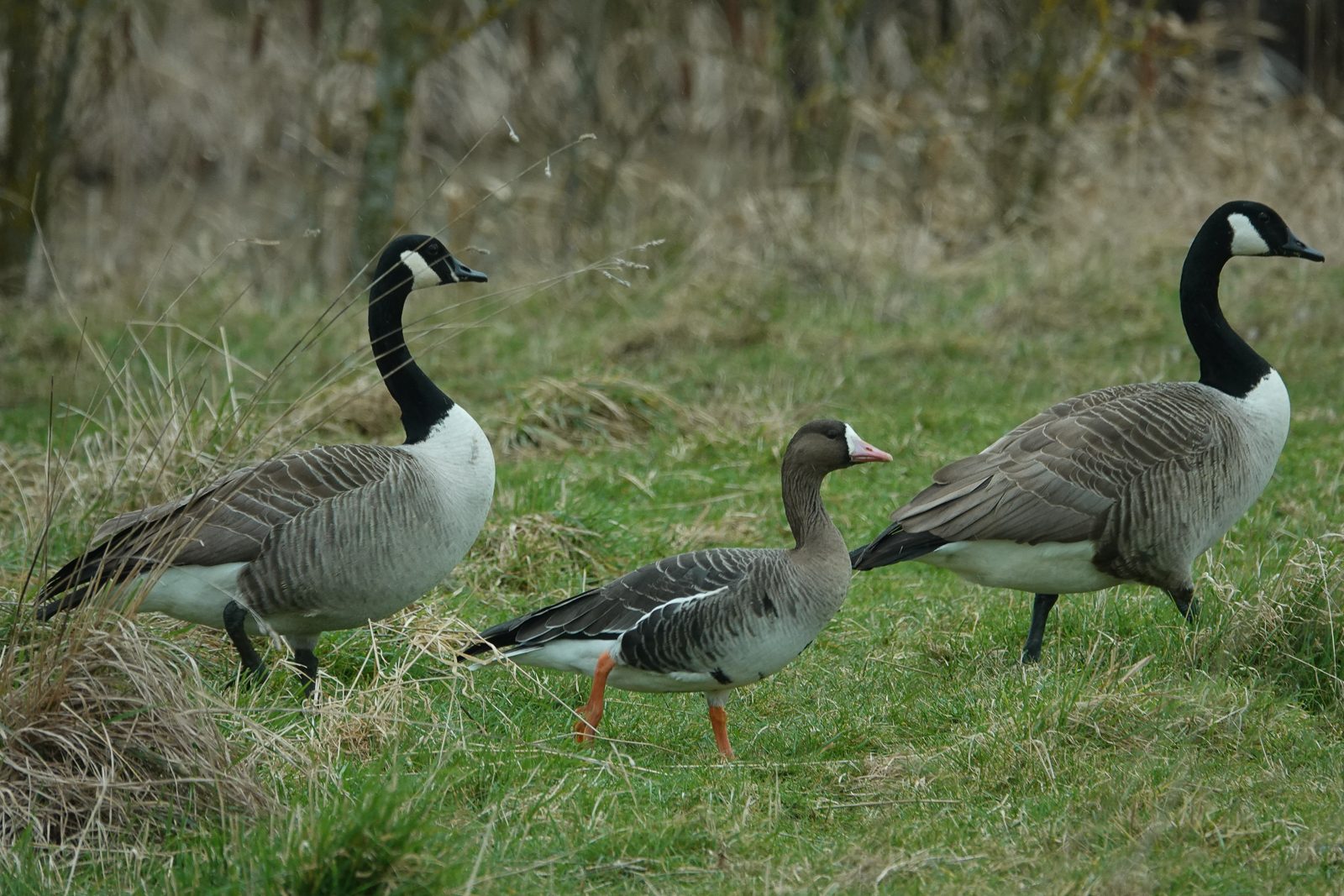
Winter: Black-throated and Great Northern Divers, Slavonian, Black-necked and Red-necked Grebes, Shag, Bewick’s and Whooper Swans, Pink-footed, White-fronted and Brent Geese, Scaup, Long-tailed Duck, Ring-necked Duck, Smew, Red-breasted Merganser, Bittern, Great Grey Shrike and Snow Bunting
More extreme rarities: These have included Purple Sandpiper Woodchat Shrike, Grey-headed Wagtail, Bee-eater, Ring-necked Duck, Ferruginous Duck, Long-tailed Duck, Red-necked and Grey Phalarope, Pomarine Skua, Little Auk, Black-throated Diver, Fulmar, Gannet, Red-backed Shrike, Great Grey Shrike and Snow Bunting