

Birds
 Short-eared Owl – Steve Blain
Additional information
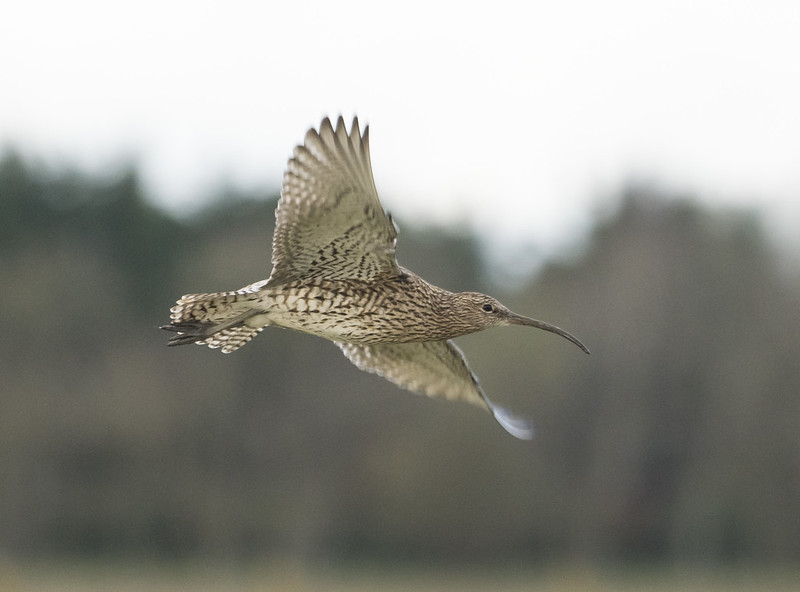
Being situated on a relatively high area of North Bedfordshire, the site’s main claim to fame is breeding Curlew. There have been between one and three pairs here in recent years, although breeding is hard to prove. You can hear their evocative bubbling calls in the spring.
The site is used for a number of purposes now: a variety of light industries; new car storage; corporate car racing (Palmersport); very occasional light aircraft on the eastern section; and some sheep grazing.
The Bedfordshire Bird Club and BNHS have been working with Palmersport for wildlife recording purposes and habitat management, largely focused on the Curlews, occasional breeding Ringed Plovers and provision of nesting boxes. Meadow Pipits, Corn Buntings, Yellowhammers and Yellow Wagtails are present, and both Barn Owls and Little Owls are local breeders.
At passage times, you could find Stonechat, Whinchat and Wheatear (sometimes in large numbers in early spring). Marsh Harrier is regular, and both Hen and Montagu’s Harriers have been recorded. Peregrine is likely to be seen, given enough visits and, in winter, Merlin and Short-eared Owl regularly turn up. Thurleigh was also the site of the county’s first Red-footed Falcon and several other significant records such as Leach’s Petrel. From autumn through to early spring, you can see Golden Plovers in the area, often on the concrete runway. Other notable records include Quail, Whimbrel, Bar-tailed Godwit, Mediterranean and Yellow-legged Gull, Kittiwake and an intriguing set of records of Dotterel in the 1990s.
The area to the south of the perimeter fence was fallow/set-aside for several years (2004-2007), encouraging raptors such as Hen Harrier, Merlin and Peregrine, and Short-eared and Barn Owls (and birders) to visit. In recent years, the majority of this area has been cultivated but remains an interesting area, with several singing Corn Buntings, Stonechats (winter), Quail, Spotted Flycatchers (summer), Barn Owls and various migrants. The hedges around Backnoe End are often good for wintering buntings, with over 100 Corn Buntings here in winter. A footpath (TL058598) leads north (alongside a building suppliers) to the edge of the airfield and some derelict buildings. Little and Barn Owls, Stock Doves and Swallows nest around here and the small reservoirs are worth a quick look. This is also a good area for butterflies. The path continues west along the perimeter. This used to be the best area to look for Curlews in the breeding season but recent access onto the site by birders with permission, suggests the area to the east (the runway and surrounding grassland) is the best, as well as the corporate race circuit (out of view from public rights of way). A pair of Wheatears was seen in June 2010 but breeding was not confirmed. Traditionally, Turtle Doves could be found here but sadly, this is probably now a thing of the past. Further afield, the area to the northwest of the airfield, around Galsey Wood, used to be a traditional area for Tree Sparrows. Given time, a walk around the perimeter should provide a good range of farmland birds but, if one is short of time, a spring-time visit with a scan from the end of Keysoe Row West, a walk around the eastern end, or a walk in from Backnoe End would be the best use of time. (Jan 2025)