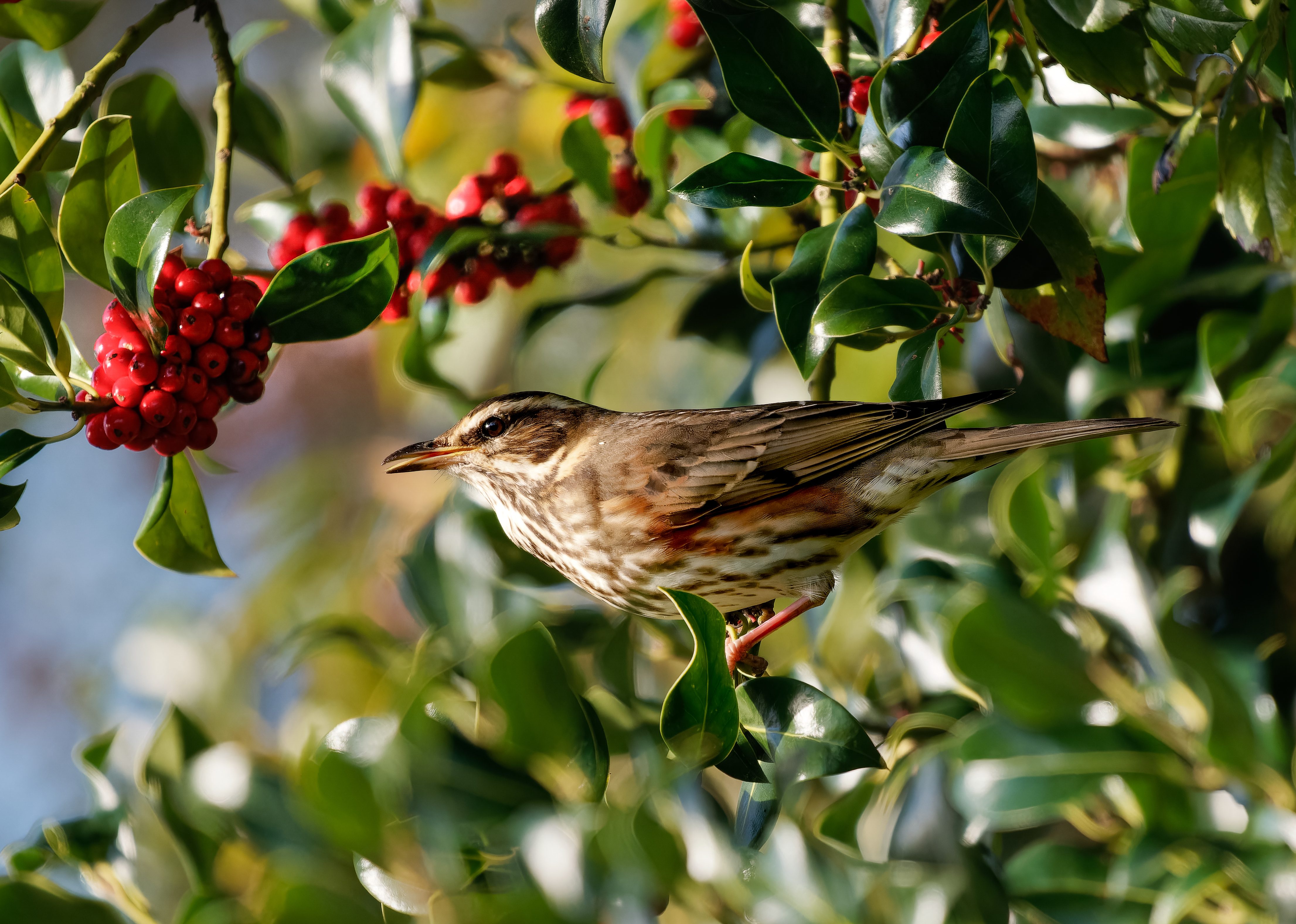
We welcome your participation in this survey that allows us to track the changing fortunes of species feeding or foraging in our gardens.
This long running survey is again being co-ordinated by Barry Nightingale.
2026/7 Winter Garden Bird Feeding Survey (coming soon)
September 2026 – February 2027
The current Winter Garden Bird Feeding Survey starts on 29th September 2026 and finishes at the end of February 2027.
The recording forms are here in PDF and Excel format.
2025/6 Winter Garden Bird Feeding Survey (latest)
INTRODUCTION
For the survey for last winter, covering the 22-week period from October 2025 to the start of March 2026, we received returns from just 56 gardens, which was 11 less than the previous winter.
The average number of species recorded in the rural gardens was 24.8, but in urban gardens was only 18.7, the lowest since winter 2013/14. Rob Dazley, from his Dunstable garden, commented a “noticeable drop in numbers this winter” and John Pitts, from his Toddington garden, commented “Not a great winter”.
| Table 1 Average number of species per garden – winters 2019/20 to 2025/26 | |||||||
| 2019/20 | 2020/21 | 2021/22 | 2022/23 | 2023/24 | 2024/25 | 2025/26 | |
| Rural gardens | 26 | 26.2 | 26.4 | 26.5 | 24.7 | 24.7 | 24.8 |
| Urban gardens | 19.6 | 20.3 | 19 | 19.8 | 19.5 | 18.9 | 18.7 |
The total number of species in the surveyed gardens last winter was 63, two lower than the previous winter survey, but included two species not previously recorded in our winter garden surveys, with Firecrest and Great White Egret now added to the list.
Table 2 includes all species that have been recorded in our winter gardens since 2018/19. As the table shows, there were five species that were recorded in all participating gardens last winter – Blackbird, Robin, Woodpigeon, Blue Tit and Great Tit, whilst Dunnock and Magpie were found in all urban gardens.
The Starling, House Sparrow and Song Thrush were all in the lowest level of gardens since our winter garden surveys started in 1993/94, and only Ring-necked Parakeet and Little Egret of the more regular visitors were in the highest level since the start. For the first time in our winter surveys Bramblings were not found in any of the gardens, nor were Bullfinch, Marsh Tit or Yellowhammer.
| TABLE 2 PERCENTAGE OF GARDENS THAT EACH SPECIES WAS RECORDED IN | |||||||||
| position | % | % | % | % | % | % | % | % | |
| 25/26 | 24/25 | 23/24 | 22/23 | 21/22 | 20/21 | 19/20 | 18/19 | ||
| 1st= | Blackbird | 100 | 100 | 100 | 100 | 100 | 100 | 100 | 100 |
| 1st= | Robin | 100 | 100 | 100 | 100 | 100 | 100 | 100 | 100 |
| 1st= | Woodpigeon | 100 | 100 | 100 | 100 | 100 | 99 | 100 | 100 |
| 1st= | Blue Tit | 100 | 100 | 100 | 98 | 100 | 100 | 100 | 100 |
| 1st= | Great Tit | 100 | 97 | 96 | 97 | 98 | 96 | 100 | 98 |
| 6th= | Dunnock | 96 | 99 | 96 | 97 | 100 | 97 | 99 | 97 |
| 6th= | Magpie | 96 | 93 | 96 | 92 | 97 | 92 | 93 | 91 |
| 8th | Collared Dove | 89 | 82 | 84 | 89 | 88 | 92 | 85 | 92 |
| 9th | Goldfinch | 88 | 85 | 86 | 91 | 92 | 96 | 90 | 91 |
| 10th | Wren | 82 | 93 | 86 | 94 | 94 | 99 | 92 | 85 |
| 11th | Long-tailed Tit | 79 | 82 | 80 | 77 | 77 | 84 | 90 | 85 |
| 12th= | Chaffinch | 77 | 73 | 75 | 86 | 78 | 86 | 85 | 88 |
| 12th= | Greenfinch | 77 | 73 | 71 | 65 | 66 | 72 | 75 | 72 |
| 14th | Starling | 71 | 81 | 87 | 88 | 85 | 87 | 81 | 88 |
| 15th | House Sparrow | 70 | 76 | 81 | 83 | 78 | 78 | 78 | 74 |
| 16th= | Coal Tit | 63 | 69 | 64 | 74 | 62 | 67 | 92 | 80 |
| 16th= | Carrion Crow | 63 | 61 | 62 | 56 | 60 | 68 | 60 | 52 |
| 18th | Jackdaw | 61 | 70 | 67 | 65 | 66 | 66 | 61 | 62 |
| 19th | Sparrowhawk | 55 | 64 | 61 | 62 | 62 | 70 | 65 | 57 |
| 20th | Gt Sp Woodpecker | 46 | 49 | 43 | 50 | 52 | 51 | 63 | 54 |
| 21st | Feral Pigeon | 45 | 45 | 48 | 36 | 25 | 22 | 19 | 17 |
| 22nd | Red Kite | 41 | 33 | 41 | 36 | 42 | 32 | 26 | 23 |
| 23rd | Goldcrest | 38 | 31 | 32 | 27 | 31 | 30 | 38 | 37 |
| 24th | Blackcap | 32 | 43 | 42 | 59 | 57 | 50 | 29 | 35 |
| 25th | Song Thrush | 30 | 34 | 35 | 52 | 37 | 53 | 49 | 58 |
| 26th | Pied Wagtail | 27 | 34 | 32 | 45 | 35 | 30 | 21 | 42 |
| 27th | Green Woodpecker | 25 | 16 | 26 | 20 | 25 | 26 | 26 | 25 |
| 28th= | Redwing | 23 | 24 | 29 | 45 | 26 | 47 | 25 | 32 |
| 28th= | Pheasant | 23 | 21 | 28 | 27 | 34 | 38 | 39 | 31 |
| 28th= | Stock Dove | 23 | 16 | 17 | 17 | 23 | 22 | 25 | 22 |
| 31st= | Rook | 21 | 21 | 20 | 20 | 15 | 18 | 18 | 18 |
| 31st= | Buzzard | 21 | 21 | 14 | 11 | 17 | 21 | 15 | 14 |
| 33rd | Chiffchaff | 20 | 25 | 32 | 17 | 17 | 13 | 14 | 8 |
| 34th= | Jay | 18 | 24 | 23 | 21 | 48 | 25 | 36 | 18 |
| 34th= | Siskin | 18 | 15 | 22 | 17 | 22 | 26 | 4 | 25 |
| 36th= | Grey Wagtail | 16 | 13 | 12 | 15 | 8 | 14 | 24 | 15 |
| 36th= | Fieldfare | 16 | 12 | 13 | 24 | 9 | 26 | 10 | 31 |
| 36th= | Black-headed Gull | 16 | 12 | 10 | 21 | 12 | 14 | 13 | 15 |
| 39th= | Nuthatch | 14 | 18 | 16 | 20 | 20 | 14 | 19 | 11 |
| 39th= | Tawny Owl | 14 | 12 | 20 | 12 | 26 | 16 | 21 | 14 |
| 39th= | Grey Heron | 14 | 6 | 7 | 14 | 14 | 5 | 13 | 11 |
| 42nd= | Moorhen | 9 | 10 | 9 | 9 | 9 | 9 | 8 | 8 |
| 42nd= | Ring-n Parakeet | 9 | 6 | 4 | 8 | 3 | 4 | 3 | 0 |
| 42nd= | Mallard | 9 | 4 | 10 | 5 | 11 | 8 | 10 | 5 |
| 45th= | Kestrel | 7 | 9 | 3 | 9 | 17 | 8 | 7 | 6 |
| 45th= | Treecreeper | 7 | 4 | 7 | 8 | 8 | 8 | 11 | 9 |
| 45th= | Redpoll | 7 | 3 | 12 | 6 | 8 | 12 | 7 | 8 |
| 48th= | Mistle Thrush | 5 | 4 | 10 | 14 | 12 | 13 | 18 | 18 |
| 48th= | Little Egret | 5 | 1 | 3 | 0 | 3 | 0 | 0 | 2 |
| 50th= | Reed Bunting | 4 | 6 | 6 | 3 | 5 | 8 | 6 | 12 |
| 50th= | Kingfisher | 4 | 4 | 3 | 6 | 6 | 5 | 8 | 3 |
| 50th= | Red-l Partridge | 4 | 3 | 1 | 2 | 5 | 3 | 4 | 8 |
| 53rd= | Lesser B-b Gull | 2 | 4 | 3 | 3 | 2 | 0 | 1 | 0 |
| 53rd= | Raven | 2 | 3 | 4 | 5 | 3 | 1 | 0 | 2 |
| 53rd= | Mute Swan | 2 | 3 | 1 | 2 | 2 | 3 | 1 | 2 |
| 53rd= | Cormorant | 2 | 1 | 1 | 3 | 2 | 3 | 3 | 0 |
| 53rd= | Little Grebe | 2 | 1 | 1 | 2 | 2 | 1 | 1 | 2 |
| 53rd= | Peregrine | 2 | 1 | 0 | 0 | 0 | 1 | 0 | 0 |
| 53rd= | Barn Owl | 2 | 0 | 1 | 2 | 2 | 3 | 1 | 3 |
| 53rd= | Linnet | 2 | 0 | 1 | 2 | 0 | 0 | 0 | 0 |
| 53rd= | Mandarin | 2 | 0 | 0 | 0 | 2 | 0 | 0 | 2 |
| 53rd= | Firecrest | 2 | 0 | 0 | 0 | 0 | 0 | 0 | 0 |
| 53rd= | Great White Egret | 2 | 0 | 0 | 0 | 0 | 0 | 0 | 0 |
| Brambling | 0 | 6 | 1 | 5 | 15 | 5 | 4 | 5 | |
| Swallow | 0 | 4 | 3 | 2 | 0 | 1 | 3 | 2 | |
| House Martin | 0 | 3 | 1 | 2 | 0 | 1 | 1 | 0 | |
| Little Owl | 0 | 3 | 0 | 0 | 2 | 0 | 0 | 0 | |
| Herring Gull | 0 | 1 | 4 | 3 | 5 | 4 | 0 | 0 | |
| Marsh Tit | 0 | 1 | 1 | 2 | 2 | 1 | 8 | 3 | |
| Yellowhammer | 0 | 1 | 0 | 0 | 0 | 3 | 0 | 6 | |
| Greylag Goose | 0 | 0 | 3 | 2 | 2 | 1 | 3 | 2 | |
| Woodcock | 0 | 0 | 3 | 2 | 0 | 1 | 0 | 3 | |
| Common Gull | 0 | 0 | 1 | 5 | 0 | 3 | 1 | 2 | |
| Gadwall | 0 | 0 | 1 | 2 | 3 | 1 | 1 | 2 | |
| Canada Goose | 0 | 0 | 1 | 2 | 0 | 1 | 3 | 3 | |
| Wigeon | 0 | 0 | 1 | 2 | 0 | 1 | 1 | 2 | |
| Teal | 0 | 0 | 1 | 2 | 0 | 0 | 0 | 2 | |
| Meadow Pipit | 0 | 0 | 1 | 2 | 0 | 0 | 0 | 0 | |
| Lapwing | 0 | 0 | 1 | 0 | 0 | 0 | 0 | 0 | |
| Waxwing | 0 | 0 | 1 | 0 | 0 | 0 | 0 | 0 | |
| Yellow-legged Gull | 0 | 0 | 1 | 0 | 0 | 0 | 0 | 0 | |
| Bullfinch | 0 | 0 | 0 | 5 | 12 | 9 | 22 | 17 | |
| Willow Warbler | 0 | 0 | 0 | 2 | 0 | 1 | 1 | 0 | |
| Snipe | 0 | 0 | 0 | 2 | 0 | 0 | 0 | 0 | |
| Yellow-b Warbler | 0 | 0 | 0 | 2 | 0 | 0 | 0 | 0 | |
| Yellow Wagtail | 0 | 0 | 0 | 0 | 2 | 0 | 0 | 0 | |
| Grey Partridge | 0 | 0 | 0 | 0 | 2 | 0 | 0 | 0 | |
| Water Rail | 0 | 0 | 0 | 0 | 0 | 1 | 0 | 0 | |
| Lesser Sp W’pecker | 0 | 0 | 0 | 0 | 0 | 0 | 1 | 0 | |
| Tree Sparrow | 0 | 0 | 0 | 0 | 0 | 0 | 1 | 0 | |
| Ring Ouzel | 0 | 0 | 0 | 0 | 0 | 0 | 0 | 2 | |
Table 3 shows the ‘Top 20’ species that were the most frequent in our gardens. The frequency is calculated by taking the total number of weeks that each species is recorded and comparing that to the maximum possible total (i.e., 22 weeks x 56 gardens). Statistically, the Red Kite should creep into this list, replacing Great Spotted Woodpecker, but I’ve decided to keep Red Kite out as the treatment across all gardens is not consistent. Please only record Red Kite if it is actively hunting over the airspace in your garden, rather than just flying over. As usual, topping this table for last winter was the Woodpigeon at 92%, the same level now for the last three winters. Several species showed huge drops though, particularly Blackbird, but also Great Tit, Dunnock, House Sparrow, Starling and Chaffinch. More details about those later.
The Weather
October saw varied weather across the UK, with regional differences in temperature, rainfall, and sunshine hours reflecting the dynamic nature of autumn. Temperatures were generally above the long-term average for most regions, with East Anglia having a maximum of 14.8°C, with the mean temperature in our region being 11.7°C (+0.4°C above average). This resulted from the persistence of mild air masses and the absence of prolonged cold spells. It was however, the dullest October in UK in almost 60 years, although England’s eastern regions enjoyed more sunshine, but with East Anglia having only 69% of average sunshine hours. Rainfall in England was 90% of the long-term average.
November brought very variable weather across the UK. Overall, the month was warmer, wetter (for the UK it was the wettest month for 2025) and sunnier than average. Temperatures were variable, starting unusually warm before dropping sharply after mid-month. England recorded its tenth warmest November on record, with both maximum and minimum temperatures well above average. For East Anglia the mean temperature was 8.7°C (1.3°C above average), sunshine hours were 4% above and rainfall was 48% above.
The first three weeks of December were mild and wet as low pressure brought unsettled conditions and frontal systems across the country, with unsettled conditions continuing until Christmas Eve, when high pressure arrived over the UK. Conditions then remained clear, sunny and cool for most of the UK over the final week. In contrast to much of the UK, East Anglia was much drier, recording just 80% of average rainfall. Across the regions, the highest mean temperatures were recorded in the south, with East Anglia reaching a mean of 6.7°C (1.9°C above average). Sunshine duration was slightly above average for the UK overall, and East Anglia enjoyed 70.8 hours of sunshine (130% of average).
January was marked by a mix of wintry outbreaks, persistent rainfall and strong regional contrasts across the UK. While the month opened with a distinctly cold spell, it soon transitioned into a wetter, more unsettled pattern shaped by some significant storms. Regional statistics highlighted the diversity of conditions experienced across the country, with some areas recording exceptionally high rainfall while others remained comparatively dry. Overall, the UK recorded 117% of its long‑term average rainfall but East Anglia received 152% of the average. The mean temperature in East Anglia was 0.5°C below average, whilst sunshine hours in East Anglia were 5% above average.
February continued the unsettled, rain‑dominated pattern established in January, fuelled by a stronger‑than‑usual jet stream that repeatedly pushed frontal systems towards the UK. With colder Scandinavian air blocking progression to the east, rainfall became trapped over many parts of southern England, with East Anglia recording 168% of its long-term average. Temperature-wise England recording its fourth warmest February. Sunshine was limited almost everywhere, making this the fourth dullest UK February on record.
The information about the weather was adapted, with permission, from Crown copyright data supplied by the Met Office, and we are grateful to them (© Crown copyright, published by the Met Office).
THE MAIN RESULTS
Gamebirds, Waterfowl, Doves and Pigeons
The Pheasant was recorded in 23% of the gardens, a small increase over the very low level in the previous winter. All the records were from rural areas. The Red-legged Partridge was found in just two rural gardens, the same result as the previous winter.
There were three species of wildfowl recorded last winter, with Mallard in 9% of gardens, and Mute Swan and Mandarin Duck both in 2%. As you might expect, all three species were only in rural gardens. The Little Grebe, not strictly ‘wildfowl’, was in one rural garden.
Once again it is of no surprise to see that the Woodpigeon tops all the lists for last winter, being found in all gardens. The frequency remains stable, at 92%, the same now for the last three winters, and is pretty much the same across the average for gardens in rural and urban areas. After low results for Collared Dove in the previous two winters, last winter saw an increase, up from lows of 84% (2023/24) and 82% (2024/25) of gardens to 89% last winter. That is back to the levels prior to winter 2023/24. There is a small difference between rural and urban results, being found in 91% of the former and 88% of urban gardens. There is, however, a difference in the frequency, at 58% of rural gardens and 45% of urban areas. Lawrence Jarrett, from his Luton garden, had “significantly higher” numbers of Collared Dove. The results for Feral Pigeon are stable, being in 45% of gardens overall. As you might expect though, they have a preference for urban sites, being found in 63% of those gardens, and in only 31% of rural areas. After a few winters with increases in rural areas, those gardens seem now to be less favourable. For the Stock Dove, after three winters of low results, the situation improved last winter, being found in 23% of gardens, a return to the levels prior to winter 2022/23. They show a very strong preference for rural areas, and were in only two urban gardens, each for just a single week.
Rails, Gulls, Herons, Raptors and Owls
Moorhens were recorded in 9% of gardens, the average level over several winters. Typically, they were all in rural areas.
Just two species of gull feature in our lists for last winter, with Black-headed Gull in 16% of gardens, and Lesser Black-backed Gull in just 2%.
The Grey Heron was in 14% of gardens, almost all in rural areas, Little Egret in 5%, all rural, and then an addition to our winter garden lists, with a Great White Egret in Peter Nash’s paddocks in Sandy.
Remarkably, there are five raptor species in our list for last winter. The most widespread, as usual, was the Sparrowhawk, recorded in 55% of gardens. However that was the lowest level since 53% in winter 2002/03. Red Kites were seen over 41% of gardens, but how many of those were actually hunting, or just passing over. Similarly Buzzards were seen over 21% of gardens and Kestrels in 7%. Mick and Lisa Dawson, from their Ickwell garden, watched a Peregrine Falcon “spend several minutes circling over our meadows and garden, presumably prospecting for food”.
Two species of owl were reported, with Tawny from 14%, mostly rural, and Barn Owl, in one rural garden.
Kingfisher, Woodpeckers, Parakeet and Crows
The Kingfisher was recorded in two rural gardens.
The Great Spotted Woodpecker was in 46% of gardens last winter. As expected, they show a strong preference for rural gardens, in 56% of those, compared to 33% of urban sites. Moreover, they are more frequent too in rural sites, at 25%, compared to just 10% in urban gardens. The Green Woodpecker had a good recovery after the disappointing result from the previous winter, being in 25% of gardens. Apart from one urban garden, all were in rural areas.
The Ring-necked Parakeet showed in one rural and four urban gardens, but was not regular in any of them, although being in five gardens in total, that was the most since our winter surveys started.
The Magpie was recorded in 96% of gardens. They were in all the surveyed urban gardens, but were missing from two of the rural gardens. Despite that, they were more frequent in rural areas, at 69%, compared to urban gardens, at 59%. After several winters of increasing results, the Jackdaw was in only 61% of gardens, the lowest since winter 2019/20. The decrease was most obvious in the rural gardens. The Carrion Crow appeared in 63% of gardens, about average for the previous few winters. They show a slight preference for rural gardens, in 66% of those, compared to urban areas, 58% of those but, where they appear, the frequency is almost the same across all areas.
Last winter the Jay was in 18% of gardens, the lowest since the same level in 2018/19. All but one of the gardens that they appeared in were in rural areas. On the occasions when they visit the feeders in my Woburn garden they give us a real buzz. The Rook was in 21% of gardens, much the same as the previous three winters. As expected, they show a preference for rural gardens.
Tits, Warblers, ‘Crests, Wren, Nuthatch and Treecreeper
As usual, the Blue Tit was seen in all the surveyed gardens last winter and was the second-most frequent visitor after Woodpigeon. All the measures for Blue Tit are very stable. The Great Tit was also seen in all gardens last winter. Typically, they are much more frequent in rural gardens, at 79% in those, compared to 62% in urban gardens but, with an overall frequency of 72%, that is the lowest level since our winters surveys started.
Long-tailed Tits were in 79% of gardens, on the low side compared to recent winters. They were in just 84% of rural gardens last winter compared to 95% the previous winter, but increased in urban gardens, up from 63% to 71%.
The results for the Coal Tit are very erratic from one winter to the next, last winter being in 63% of gardens compared to 69% in the previous winter. The Marsh Tit was not found in any of the gardens last winter, the first blank result since our winter surveys started in 1993/94. As recently as 2019/20 they were in 8% of gardens and that decline sadly reflects the worrying status of this species across the county.
Blackcaps were only found in 32% of the gardens, the lowest level since 29% in 2019/20. They were in 28% of rural gardens and 38% of urban gardens, typically finding the warmer micro-climate in those gardens to their liking. Chiffchaffs were in 20% of gardens, the lowest for them since 2022/23. Unlike the previous species almost all the records were in rural gardens.
The Wren was in just 82% of gardens last winter, the lowest level since 2013/14, when they were in 81%. The reduction occurred across the board – in rural gardens they dropped from 98% the previous winter to 91% last winter, and in urban gardens from 85% to 71%. Considering that the winter was relatively mild, the cause for the reduction is not obvious.
A Firecrest was found by Br. John Mayhead in his survey area at Turvey Abbey during the last three weeks of the survey period, and that was another addition to the species that have been found during our winter garden surveys. Goldcrests were in 38% of gardens, the highest since the same number in 2019/20. They show a small preference for rural sites, being in 41% of gardens in those areas, but were still in 33% of urban gardens.
The Nuthatch was in 14% of gardens, with eight out of those nine gardens in rural areas, and the Treecreeper was in 7%, which was about average.
Starling to Thrushes
Starlings were in 71% of gardens, the lowest level since our winter garden surveys began. In the first five winters of our survey they were in 99% of gardens, and as recently as Winter 2012/13 they were in 91%. The reduction occurred last winter in both rural and urban gardens. Last winter they were in 75% of rural sites compared to 87% the previous winter, and in only 67% of urban gardens compared to 81% in the previous winter. With these low numbers it’s no surprise to see that the frequency across all gardens was down at 41%, again the lowest for that measure since our winter surveys began. Mr & Mrs Kimsey, from their Radwell garden, commented “very few Starlings around this winter”. Peter Nash, from his Sandy garden added “notable was the lack of any Starlings on the deck or feeding – plenty flying over”.
As usual, the Robin was found in all gardens, and it has not dropped below that level since winter 2009/10 when it was in 99%. The overall frequency was down though, at 84%. Whilst in rural gardens that measure stayed about the same (92% in Winter 2024/25 and 91% last winter), the reduction was in urban gardens, dropping to 75% last winter after 82% in the previous winter.
Whilst the Blackbird was recorded in all participating gardens, as it has been since the Winter 2005/06 survey, the frequency dropped to 68%, by far the lowest since our winter surveys began in 1993/94. As we’ve mentioned before in these summaries, similar declines have been noticed elsewhere, leading to the BTO running a survey ‘Blackbirds in Gardens’ to try to establish what is behind the declines (believed to be caused by the Usutu virus), and how widespread it is. At the time of writing this article the records from the many gardens that were surveyed are now being analysed by BTO. In our survey, the frequency in rural gardens last winter was just 74% and in urban areas only 60%.
The Song Thrush was only reported from 30% of gardens, the lowest level ever. In Winter 2003/04 they were in 87% of the gardens, and as recently as Winter 2017/18 were in 73%. Last winter they were in 53% of rural gardens but in none of the 24 urban gardens that were surveyed. Almost as poor was the result for the Mistle Thrush and, in only 5% of the gardens, that was just a slight improvement on the previous winter, when it was in only 4%. As recently as winter 2017/18 they were in 33% of gardens. All three gardens holding Mistle Thrushes were in rural areas.
Of the two ‘winter’ thrushes, the Redwing was only found in 23% of gardens, the lowest level in our surveys since 2006/07, when it was in 18%. The Fieldfare was in 16% of gardens. John Pitts, from his Toddington garden, added “No winter thrushes or Siskins this time”.
Sparrows, Dunnock, Wagtails, Finches and Buntings
The House Sparrow was recorded in only 70% of the gardens, split between 75% of urban gardens and 66% of rural gardens. Overall, that was the lowest since our winter surveys started. The frequency, at 46%, was also the lowest ever. However, Judith Knight was pleased to see one in her Linslade garden in January, which she described as “a rare visitor”. But then Trevor and Elizabeth Askew, from their Luton garden, reported “a big decline – House Sparrows from 20 plus to one or two occasionally”. They thought that was due to nearby trees being cut down.
The Dunnock was seen in all urban gardens but was missing from two rural gardens. Nevertheless, it remained much more frequent in rural gardens, at 65%, than in urban sites, at 51%.
The Pied Wagtail was in 27% of the gardens, the lowest since 21% in Winter 2019/20. It retains a preference for rural gardens, in 34% of those, but that was down from 45% in the previous winter. It showed in 17% of urban gardens, a slight increase since the previous winter. The Grey Wagtail was found in 16% of gardens, the highest since 2019/20, when it was in 24%.
The Goldfinch was, as usual, the most widely reported finch in our winter gardens, in 88% last winter. It was in 84% of rural gardens, slightly down from the previous winter, and in 92% of urban areas, a big increase. Overall though, the frequency dropped from 60% to 55%, the lowest since the same in 2019/20. The Chaffinch, which has been going through some bad times recently, was in 77% of gardens, the best since 2022/23. Like the Goldfinch, it seems to be preferring urban gardens, in 95% of those last winter, compared to 69% of rural gardens. The Greenfinch was also in 77% of gardens, the highest since Winter 2015/16, when it was in 83%. Unlike the Chaffinch though, it was found in more rural gardens, in 84%, rather than urban gardens, in 67%. But like the Chaffinch, the frequency across all gardens was low. Lawrence Jarrett was pleased to see a pair of Greenfinches in his Luton garden, “the first for a year or two”. Andrew Budd, from his Ampthill garden and another long-term supporter of this survey, added that a highlight for him last winter “was seeing a male Chaffinch (during the RSPB Big Garden BirdWatch by pure coincidence) which was one of just two I’ve seen over the last two years…Greenfinches are still doing well and have regularly been the most numerous bird seen on my feeders”. Terry Osborn, from his Clifton garden, added “first Greenfinch for at least two years”.
For the third winter in a row none of the surveyed gardens recorded Bullfinch. As recently as winter 2017/18 they were in 25% of gardens. Only one of the gardens recorded Linnet and that has not been exceeded since 2001/02. In fact since then they have been absent in our surveys for ten of the winters. It was a mixed winter for the ‘winter’ finches, with Siskin in 18% of gardens, Redpolls in 7%, but Bramblings in none, the first time that has happened since our winter surveys started. Most of the gardens attracting Siskins and Redpolls were in rural areas. Peter Nash added “generally a very poor year for winter ‘migrants’ – just a couple of Redpoll and Siskin records, no Bramblings this year again and generally very quiet in what was a very mild winter. No wintering Blackcaps or Chiffchaffs either”. The Reed Bunting was in 4% of gardens, but the Yellowhammer was not recorded in any of the gardens.
GARDEN BIRD FEEDING
Most of us provide food for our garden birds, but recently there has been a lot of discussions about the unintended consequences of that. As we know (the effects are visible in our survey here), the transmission of disease, particularly Finch Trichomonosis, has been widespread and can be passed on from one infected bird to another that share the same feeders and water sources. Species that have been particularly badly hit are Greenfinches and Chaffinches, and to a lesser extent House Sparrows, Siskins, Goldfinches, Bramblings and Bullfinches. Over the past 18 months the RSPB, and others, including the BTO, have been taking part in a major review. Although there is no doubt about the positive effects of winter feeding, there is robust evidence that at other times it is causing major problems. So the updated advice is to feed seasonally, so from May to October avoid seeds and peanuts but continue with other foods e.g. fat balls and fat cakes. Importantly, keep feeders and drinking sources clean and avoid flat feeding surfaces such as bird tables.
For more information on this go to www.bto.org/bird-feeding
THE RSPB BIG GARDEN BIRDWATCH
Many of you probably take part in the RSPB Big Garden BirdWatch, held in January each year. If we look at the results from that survey for Bedfordshire, the top ten is very similar to the top ten species in our survey. Missing in the ‘RSPB’ top ten are Wren and Goldfinch, but their top ten includes Starling (12th in our list) and House Sparrow (13th in our list). The top three in the RSPB league table are Woodpigeon, Robin and Blue Tit, also all equal first in our list.
SUMMARY
We thank all the garden watchers in our survey for submitting almost 14,000 records on your completed forms. That effort continues to give us a very good picture of what is happening in our garden habitats, one that seems to becoming more important with all the increased pressures on our countryside. Hopefully some of the worrying declines I’ve detailed above will be reversed. I look forward to receiving your completed returns for future garden surveys.
Barry Nightingale
2024/5 Winter Garden Bird Feeding Survey
The Winter Garden Bird Feeding Survey started on 29th September 2024 and finished at the end of February 2025.
2023/4 Winter Garden Bird Feeding Survey
Results in The Hobby 185 (July 2025)
For the survey covering the 22-week period from the beginning of October 2023 to the end of February 2024, we received returns from 69 gardens, an increase of three from the previous winter.
The average number of species recorded in the rural gardens was 24.7, the lowest since winter 2013/14, and in urban gardens was 19.5, which is about average.
The total number of species in the surveyed gardens last winter was 75, equalling the record set in the
previous winter, and which included our first Yellow-legged Gull in this survey.